
Article written by Roger Casadejús Pérez
Early Solo Career
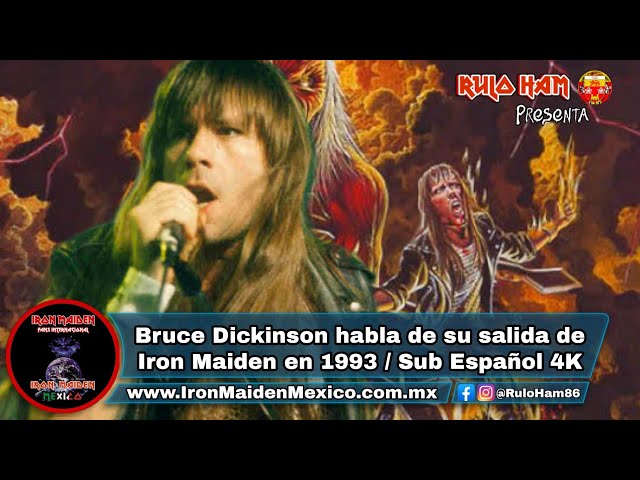
Bruce Dickinson’s solo career began with the release of Tattooed Millionaire in 1990, while he was still with Iron Maiden. The album was a commercial success, showcasing a different side of Dickinson’s musical abilities. However, it wasn’t until after his departure from the band that he fully committed to a solo path. His subsequent albums, Balls to Picasso (1994) and Skunkworks (1996), marked a departure from the heavy metal sound that defined Iron Maiden, venturing into more diverse musical territories.
Fan Reactions and Challenges
Despite his efforts to redefine his artistic identity, Dickinson faced significant challenges in gaining acceptance from his existing fan base. Many Iron Maiden fans struggled to embrace his new musical direction. Dickinson himself has recounted instances where fans would attend his solo concerts only to turn their backs in silent protest, a stark illustration of their disapproval.
The reaction from fans was not entirely unexpected. Iron Maiden had cultivated a dedicated following over the years, and Dickinson’s departure left many feeling betrayed. The initial resistance to his solo work was further compounded by the fact that his music was a departure from the heavy metal genre, exploring themes and sounds that were unfamiliar to his audience.
Artistic Evolution
Despite the lukewarm reception, Dickinson remained undeterred in his pursuit of artistic evolution. During this period, he collaborated with numerous musicians and producers, including Roy Z, who played a pivotal role in shaping the sound of his later solo albums. This collaboration led to the release of Accident of Birth (1997) and The Chemical Wedding (1998), both of which were praised for their return to a heavier, more metal-oriented sound.
These albums marked a turning point in Dickinson’s solo career, as they received acclaim from both fans and critics alike. The return to a heavier sound helped to bridge the gap between his solo work and his Iron Maiden roots, gradually winning back the approval of his fan base.
The Legacy of Bruce Dickinson’s Solo Career
Looking back, Bruce Dickinson’s solo career is a testament to his resilience and dedication to artistic expression. While the initial years were fraught with challenges and resistance, his perseverance eventually paid off. His solo work is now recognized for its diversity and innovation, contributing significantly to the broader landscape of rock and metal music.
In interviews, Dickinson has expressed gratitude for the experiences and lessons learned during his solo career. He acknowledges that the journey was not without its difficulties, but it ultimately allowed him to grow as an artist and an individual. Moreover, his solo work continues to influence and inspire musicians worldwide, highlighting the enduring impact of his contributions to the music industry.
Reconciliation with Iron Maiden
In 1999, Bruce Dickinson rejoined Iron Maiden, marking the beginning of a new chapter for both him and the band. His return was met with enthusiasm from fans and bandmates alike, and Iron Maiden continued to achieve new heights of success with Dickinson at the helm. The reunion was a testament to the enduring bond between the vocalist and the band, as well as the mutual respect that had developed over the years.
Since rejoining Iron Maiden, Dickinson has successfully balanced his dual roles as a solo artist and the lead singer of one of the most legendary bands in rock history. His ability to navigate these dual paths speaks to his exceptional talent and the respect he commands within the music industry.
Conclusion
Bruce Dickinson’s solo career, marked by its initial challenges and eventual triumphs, offers valuable insights into the complexities of artistic exploration and the resilience required to forge one’s own path. Despite the initial backlash from fans, Dickinson’s unwavering commitment to his craft allowed him to carve out a unique legacy that continues to resonate with audiences around the world.
As Bruce Dickinson reflects on his solo journey, it is clear that his experiences have enriched his artistry and contributed significantly to his enduring legacy as one of the most influential figures in rock and heavy metal music.
The story of Bruce Dickinson’s solo career serves as a reminder of the power of perseverance and the importance of staying true to one’s artistic vision, even in the face of adversity. It is a narrative that continues to inspire both fans and aspiring musicians alike, highlighting the transformative power of music and the enduring impact of an artist’s journey.